
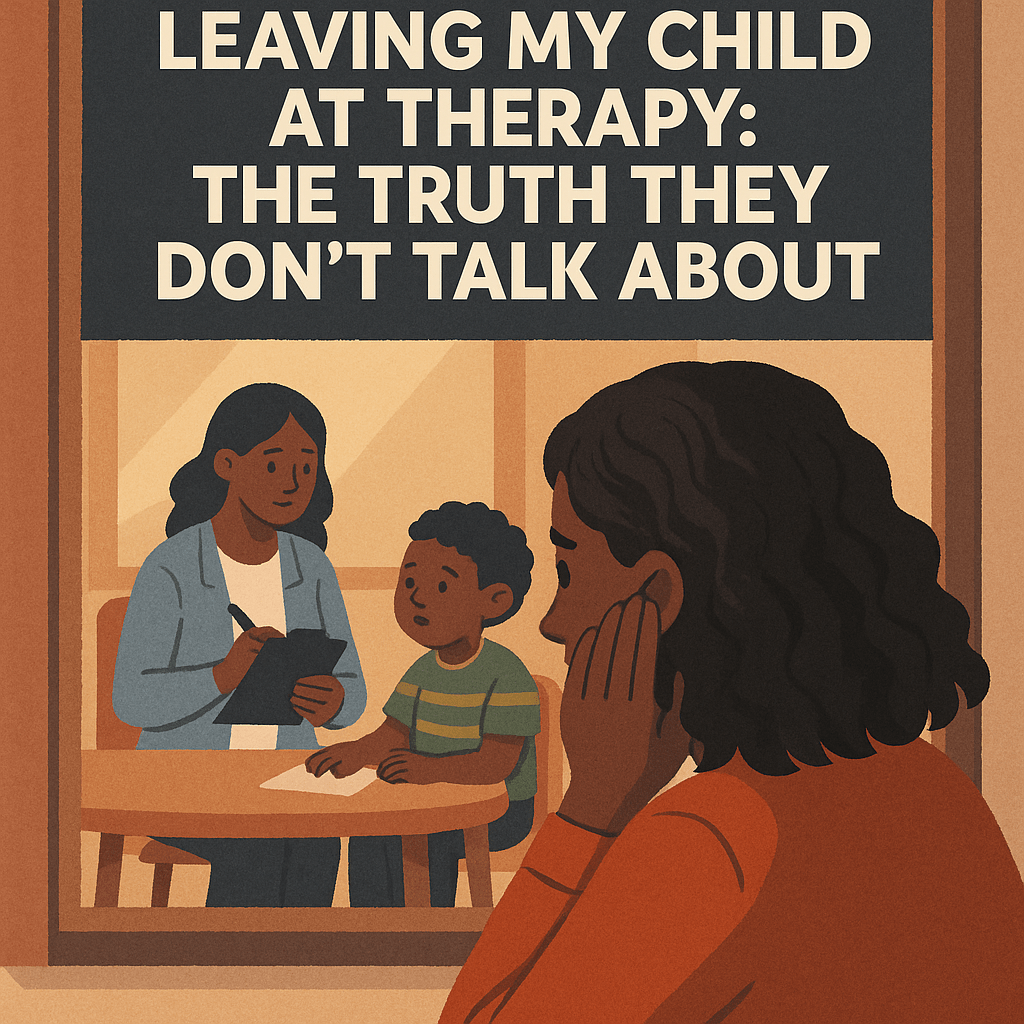
It was one of those days where the emotions sat heavy in my chest. It was Croix’s first session with a new therapist, and while he finally gathered the courage to walk in just fine, I didn’t.
Before the session, we had our usual little talk in the car. I reminded him that it’s okay to be nervous and that he’s allowed to feel unsure. We went over our safety rules: no one touches your private areas, remember your bubble space, no bullies, speak up, and tell Mommy or Daddy right away. I reminded him that if something goes wrong, we turn into Hulk Smash, Superwoman, or Mommy T. Rex (and tear the place up)! He smiled, and he relaxed a bit more. Humor has a way of easing the fear.
I Don’t Trust The Therapists
But after he walked away, I sat in the car and cried a little. I prayed. I tried to hold it together.
The truth is…I don’t trust the therapists yet. And I’ve learned that’s okay to say.
Not because they did anything wrong. But because trust is earned, and I don’t hand it over when it comes to my child. Not easily. Not quickly.
I stayed in the car the whole session, just like I’ll continue to do until my heart gives me peace about stepping completely away. I’ve never been the type of mom to just drop my child off anywhere & go about my day (not even before I knew his diagnosis). The last center, it took a lot of time. He only stays with a very small circle: my husband (of course), my mom, his bonus grandma & granddad, and every blue moon with my sister. That’s it. And honestly, that’s probably all it will ever be. Man, I just stopped leaving them a list of “to do’s & not to do’s”. Ha!
This is the part of parenting people don’t always see. The quiet protection. The inner war between faith and fear.
FBI Mode
Once the session ended and Croix got in the car, I went into FBI mode like I always do. I asked questions. I dissected feedback. I watched his body language. I try to understand him, even when his words don’t fully explain what happened. I worry that if something ever did happen, he wouldn’t be able to articulate it in time. That’s a fear I wrestle with because I know that even a few missed minutes can feel like forever.
Cry If I Want Too
It had gotten easier… but now that we’re starting over again, the wound feels fresh. The fear, renewed. I know I can’t protect him from everything. But if it’s in my lane? I absolutely will. I’ve learned that it’s not about being “overprotective.” It’s about being attentive, present, and connected. When your child is neurodivergent, that level of awareness can make the difference between feeling safe and feeling forgotten.
5 Tips for Moms Struggling to Leave Their Child at Therapy
✨Stay Close: That’s Still Being Brave
If your gut says sit in the car or stay in the waiting room, listen to it. Being near doesn’t make you clingy; it makes you conscious. Start where you’re comfortable and build trust from there.
✨Ask About Cameras or Observation Policies
Don’t be shy about asking if you can observe or if there are cameras in place. Knowing what safety measures are in place can help ease your concerns and foster transparency.
✨Request Clear Recaps After Every Session
Even if it feels like “a lot of questions,” ask them anyway. What did they do today? What are they working on? How did your child respond? Staying in the loop matters more than pretending to trust too soon. Don’t Ignore Your Intuition. If something doesn’t feel right, say it. Investigate it. Don’t silence your instincts for fear of offending someone. Your role is to protect, not to please.
✨Give Yourself Grace
Whether you cry every time or not at all, whether you sit inside or outside, know that you’re doing what works best for you and your child. Don’t compare your journey to someone else’s. You are not too much, you are enough!
To every mom reading this who’s just beginning their child’s therapy journey, I see you. You’re not crazy. You’re not overthinking. You’re just a mother who loves deeply and protects fiercely.
Stay close. Stay involved. Stay unapologetically in the loop.
You’re doing more than enough and your child feels it, even if they don’t say it.
Following @raisingmywiredking for more truthful storytelling.

 Raising My Wired King