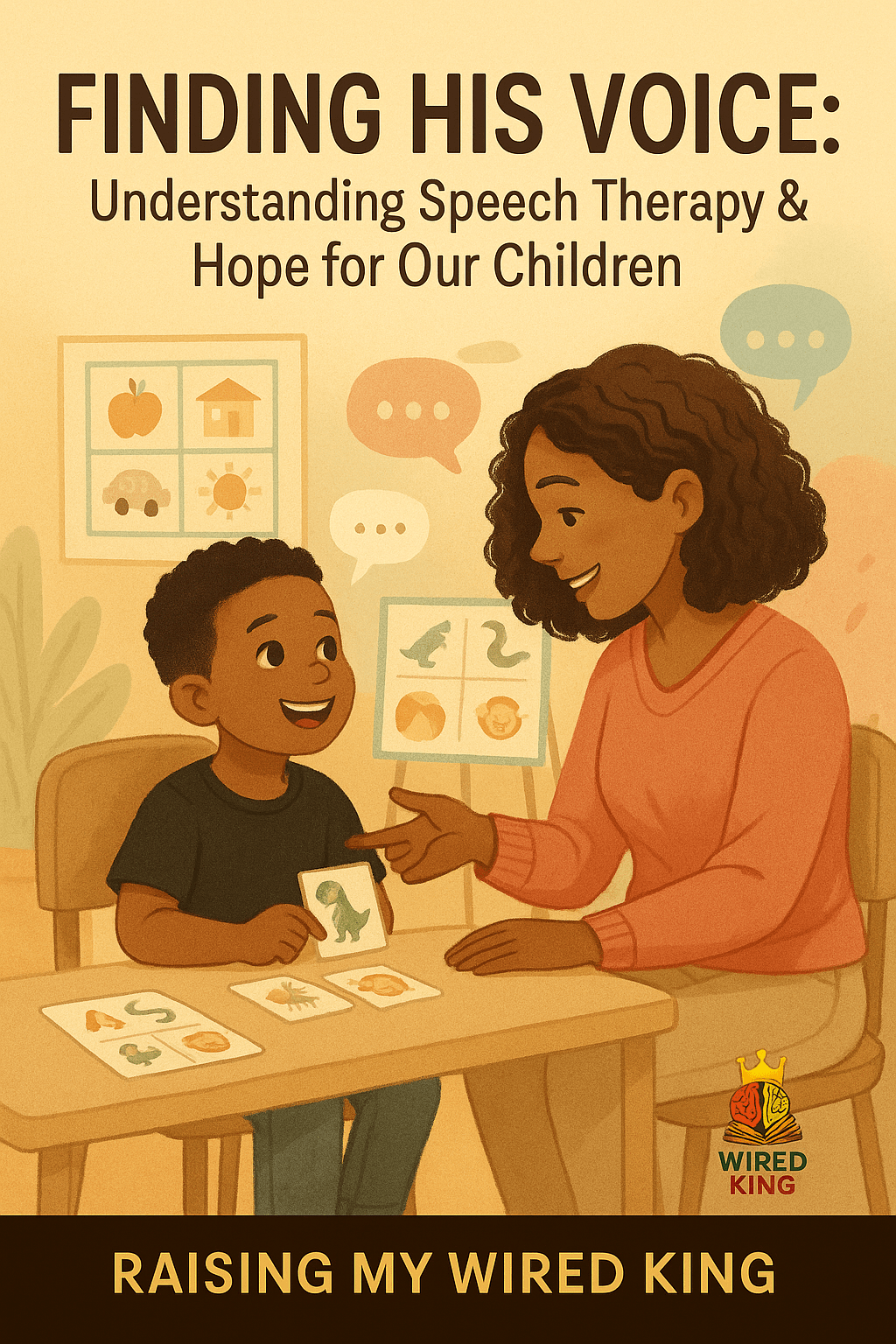
Speech therapy is one of the most impactful resources we’ve had on our journey and yet, so many parents still feel unsure, overwhelmed, or even ashamed when the topic comes up.
Let me tell you this right now: “you don’t need to be ashamed.”
Speech therapy isn’t just about talking; it’s about helping your child communicate, connect, and thrive. And there are many different types of speech therapy depending on what your child needs most.
Types of Speech Therapy We Have Done or Will Do (in simple terms):
Phonological Therapy: This helps children who mix up or skip sounds. My son was diagnosed with a phonological disorder early on. He could say some sounds, but not always in the right places or patterns. This type of therapy teaches kids to recognize sound patterns and correct them over time.
Receptive Language Therapy: Receptive language is how well your child understands what’s being said to them. Some kids hear the words but can’t process the meaning. Therapy in this area focuses on helping your child follow directions, understand questions, and make sense of language.
WH-Question Therapy: You know those classic questions: who, what, when, where, why? Some kids struggle with understanding and answering them. This therapy targets those specific question types to build comprehension and expressive language.
Echolalia Support (new for us): Echolalia is when a child repeats what they’ve heard. Sometimes immediately, sometimes later. While this is a normal part of language development for many, persistent echolalia can be a sign your child needs more support understanding or creating original language. Therapists help your child move from repeating to using their own words in meaningful ways.
Gestalt Language Processing Therapy: This is something newer for us too. Gestalt processors don’t learn language word-by-word. They learn in “chunks” or phrases they hear often. Think of it like memorizing full song lyrics before understanding what each word means. Therapy helps break those chunks down and build up more flexible, spontaneous speech. It’s beautiful. It’s just different.
Why Early Intervention Matters
The sooner you start speech therapy, the better. I can’t stress this enough. Waiting doesn’t help. Progress can happen at any age but the earlier we start, the more support they have for the road ahead.
If you’re concerned about your child’s speech, talk to your pediatrician. Ask for a referral. Be clear. Be bold. Our babies don’t have time to waste—and we don’t either.
His first referral took about 30 days to get started. Then we moved…
My son had to wait almost one year to restart this journey after we moved. That delay felt heavy. It set us back. But we kept pushing. We got the eval. And we’re back in the game now with a team that sees him. 🤞🏽
Whatever your child’s needs: phonology, echolalia, receptive language, gestalt processing; there is help. There is hope. And there is no shame in any of it!
One More Thing:
“Your voice as a parent matters.” If something feels off, don’t wait for someone else to confirm it. Start asking. Start seeking. Don’t let “folks” discourage you! Our babies are worthy of every resource, every breakthrough, and every word waiting to be spoken.

 Raising My Wired King